Can You Install DC Fast Charging (Level 3) at Home in Orange?
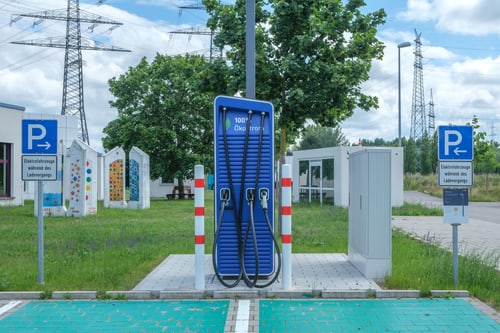
Can you install DC fast charging, the Level 3 chargers you see at highway stations, in your own garage in Orange? It is one of the most common questions drivers ask after a long road trip, and the short answer is no, not in any practical sense. DC fast charging is built for commercial sites with industrial power, not for houses wired for ordinary residential service. The good news is that the home charger you actually want is a Level 2 unit, which fills your battery overnight for a fraction of the cost. Here is why Level 3 stops at the curb, and what Level 2 delivers inside an Orange home.
The Short Answer
DC fast charging runs on three-phase power and can draw up to 500 kW, far beyond what a home electrical service can supply.
A single DC fast charger, plus the utility service upgrade behind it, runs into the tens of thousands of dollars, so no manufacturer sells one for home use.
Homes in Orange are served by Southern California Edison on single-phase 240-volt service, which matches Level 2 charging, not Level 3.
A Level 2 charger adds roughly 25 to 44 miles of range per hour and fully recharges a typical day of driving overnight.
SCE's Charge Ready Home program offers up to $4,200 in rebates toward a Level 2 install, and time-of-use rates make overnight charging cheap.
For nearly every Orange household, a Level 2 charger at home plus public DC fast charging on road trips is the complete, realistic setup.
What Is DC Fast Charging, and How Is It Different From Level 2?
DC fast charging, often called Level 3, sends direct current straight to your battery at far higher power than home charging. According to the U.S. Department of Energy's Alternative Fuels Data Center, DC fast chargers run on a three-phase AC input and can supply up to 500 kW, adding roughly 100 to 200-plus miles of range in about 30 minutes. Level 2, by contrast, uses the 240-volt single-phase power already present in most homes and tops out near 19.2 kW, with typical residential units around 7.2 kW. That gap in power is the whole story: Level 3 is a different class of equipment built for a different job, which is why it lives at highway stations rather than in garages.
Can a House Actually Supply the Power Level 3 Needs?
No. A DC fast charger needs industrial three-phase electrical service that residential properties simply do not have. Homes in Orange are served by Southern California Edison with single-phase 240-volt service, the same supply that runs your air conditioner and electric range. The three-phase, 480-volt service that commercial DC fast chargers rely on is found at businesses and along highway corridors, not on residential streets. Bringing that kind of capacity to a single house would mean a utility service upgrade, a new transformer, and permitting that treats your home like a small commercial site, work that is rarely approved and never cheap.
How Much Would Residential DC Fast Charging Cost?
Even setting the power problem aside, the economics do not work. A commercial DC fast charger is a cabinet-sized piece of equipment, and the hardware alone runs into the tens of thousands of dollars before the electrical service, trenching, and transformer upgrades that go with it. That is why no manufacturer sells a true Level 3 unit for home use: there is no market for a charger that costs more than many of the cars it would serve. There is also a running cost most drivers never see, because commercial fast-charging sites are billed on demand charges, utility fees tied to the peak power a location pulls, which can dwarf the actual energy used. Those charges are manageable for a roadside station serving dozens of cars a day, but they would be punishing spread across one household. A Level 2 install, which is the home charger you actually need, is a small fraction of all of this, and SCE's Charge Ready Home program offers up to $4,200 in rebates toward a qualifying Level 2 charger, which flips the cost equation entirely.
Do You Even Need Fast Charging at Home?
For daily driving, no, and this is the part that surprises people. DC fast charging exists to refill a battery quickly when you are away from home and in a hurry. At home you are parked for eight to twelve hours overnight, so speed barely matters; what matters is waking up to a full battery. A Level 2 charger adds about 25 miles of range per hour, which means an overnight charge replaces far more range than a typical Orange commute down the SR-55 or SR-22 ever uses. The average driver covers only around 30 to 40 miles a day, which a Level 2 charger restores in little more than an hour of a long overnight window, so the battery is full and waiting well before morning. Tesla frames the same logic for its own hardware: its home Wall Connector adds up to 44 miles of range per hour, while Superchargers, its DC fast network, are for charging on the road, up to 200 miles in 15 minutes. Home and highway are two different tools.
What Does Level 2 Charging Deliver in an Orange Home?
A Level 2 charger is the realistic, code-compliant home option, and it covers nearly every need. It runs on a dedicated 240-volt circuit; the AFDC notes that residential Level 2 units require a dedicated 40-amp circuit under the National Electrical Code, and the unit installs cleanly in a garage or on an exterior wall. Depending on the charger and your vehicle, it restores roughly 25 to 44 miles of range per hour, enough to go from nearly empty to full overnight. Pair it with one of SCE's time-of-use EV rate plans, which price overnight electricity well below the daytime peak, and you charge during the cheapest hours while you sleep. That combination, Level 2 hardware plus an off-peak rate, is what most EV owners mean when they say charging at home is effortless.
What About Older Homes and Panel Capacity in Orange?
Some Orange homes need a little electrical groundwork first, and that is normal. Many houses in the city's older neighborhoods, including around the Old Towne Orange historic district, were built with 100-amp electrical panels sized for a smaller era of appliances. Adding a Level 2 circuit on top of existing loads can leave too little headroom, so a licensed electrician runs a load calculation before installing. If the panel is full, a panel upgrade makes room; if there is spare capacity, the job is straightforward. Either way it is ordinary residential work, a world apart from the three-phase service and dedicated transformer a DC fast charger would demand.
Home Charging in Orange: Common Questions
Is there any Level 3 charger made for home use?
Not in any real sense. A few products marketed as home DC chargers exist, but they are low-power DC units aimed at specialty cases, far below the output of public Level 3 stations, and they still need electrical service most homes cannot provide. For a house, the practical and code-compliant choice is a Level 2 charger.
How fast is Level 2 charging compared with DC fast charging?
Level 2 adds roughly 25 to 44 miles of range per hour, while public DC fast charging can add 100 to 200-plus miles in about 30 minutes. The difference sounds enormous, but it only matters on the road. Parked overnight at home, a Level 2 charger has eight to twelve hours to work, so it finishes the job while you sleep.
Can I install a Tesla Supercharger at my house?
No. Superchargers are DC fast chargers that Tesla owns and operates as a public network on major routes, not residential products. Tesla's home offering is the Wall Connector, which is a Level 2 charger. If you drive a Tesla, the right home setup is a Wall Connector plus Supercharging when you travel.
Will one Level 2 charger be enough for two EVs?
Usually yes, with a little planning. A single Level 2 charger can serve two vehicles by charging them on alternating nights, and some households install two circuits or a load-sharing setup. A licensed electrician can size the panel and circuits so both cars are ready by morning without a service upgrade.
Trying to figure out what it really takes to charge your EV at home in Orange? Get a clear, flat-rate answer from a licensed C-10 team that installs Level 2 chargers across Orange County.
Instant QuoteSet Up Home Charging That Actually Fits Your House
Skip the Level 3 myth and get the home charger that works: our licensed, EVITP-certified electricians size and install Level 2 charging for homes across Orange County, with a panel upgrade included when your service needs it.