32-Amp vs 48-Amp EV Charger: Which One Does Your Orange Home Need?
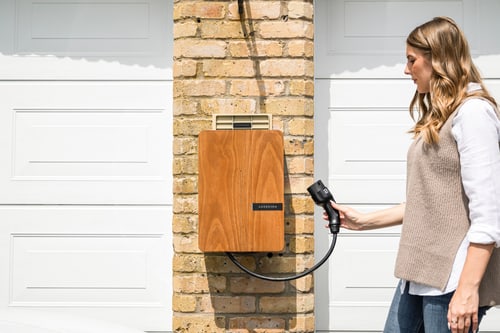
If you are shopping for a home charger in Orange, the choice usually comes down to a 32-amp vs 48-amp EV charger. Both are Level 2 units that run on 240 volts, both plug your car in overnight, and both cost about the same to buy. The real difference is how fast they refill your battery and how much electrical work your house needs to support them. For many Orange County drivers the faster unit is overkill; for others commuting daily on the SR-22, SR-55, or SR-57, it pays off. Here is how to tell which one belongs in your garage.
The Short Answer
A 32-amp charger adds roughly 25 miles of range per hour, while a 48-amp charger adds up to about 44 miles per hour on a vehicle that can accept it.
A 32-amp charger needs a 40-amp circuit; a 48-amp charger needs a 60-amp circuit, because the electrical code treats EV charging as a continuous load.
A 48-amp charger must be hardwired, while a 32-amp unit can run on a NEMA 14-50 outlet or be hardwired.
Most single-car households that drive average daily miles are fully served by 32 amps overnight.
A 48-amp charger often triggers an electrical panel upgrade in older Orange homes with 100-amp or smaller service.
Your car's onboard charger caps the real speed, and many EVs top out at 32 or 40 amps and cannot use the full 48.
What 32 Amps and 48 Amps Actually Mean
Amperage is the rate of electrical current a charger draws, and it sets how quickly your EV refills. Both 32-amp and 48-amp chargers are Level 2 units running at 240 volts; the amperage is the variable between them. A 32-amp unit delivers about 7.7 kilowatts, while a 48-amp unit delivers up to 11.5 kilowatts. More amps means more power moving into the battery each hour, and that is the entire basis of the comparison. Everything else people argue about, from cost to wiring to panel load, follows from that one number.
How Much Faster Is a 48-Amp Charger?
A 48-amp charger is roughly 50 percent faster than a 32-amp charger at the plug. The U.S. Department of Energy notes that Level 2 charging adds about 25 miles of range per hour, which is the ballpark a 32-amp unit delivers. Step up to 48 amps and a vehicle that can accept it gains more: Tesla rates its Wall Connector at 11.5 kW, or up to 44 miles of range per hour. The catch sits in that phrase, a vehicle that can accept it. Your car's onboard charger is the real ceiling, so if it maxes out at 32 or 40 amps, a 48-amp wall unit simply throttles down and you have paid for speed the car cannot use.
The Wiring Difference: 40-Amp vs 60-Amp Circuits
The jump from 32 to 48 amps changes the circuit your electrician has to run. The National Electrical Code treats EV charging as a continuous load, so the circuit must be rated higher than the charger's steady draw; the federal EV handbook for electrical contractors confirms EVSE is a continuous load under NEC Article 625. In practice a 32-amp charger needs a 40-amp breaker and circuit, while a 48-amp charger needs a 60-amp breaker and heavier conductors. Thicker wire and a larger breaker cost more in both materials and labor, and the longer the run from your panel to the garage, the wider that gap grows.
Why 48 Amps Often Means an Outlet Won't Work
A 48-amp charger cannot run on a standard NEMA 14-50 outlet; it has to be hardwired. The common 14-50 receptacle sits on a 50-amp circuit, which caps a plug-in charger at 40 amps of continuous draw, so any unit pulling 48 amps must be wired directly into the circuit. A 32-amp charger keeps more options open: it can plug into a 14-50 outlet or be hardwired, whichever suits your setup. If you want the simplicity of an outlet-based install, or the ability to unplug and take a portable unit with you, 32 amps preserves that. Choosing 48 amps commits you to a permanent, hardwired connection and the heavier circuit behind it.
The Panel Question for Older Orange Homes
A 48-amp charger is the one most likely to require an electrical panel upgrade, and that matters in Orange. Many homes in and around the Old Towne Orange historic district were built with 100-amp service or smaller, and a 60-amp EV circuit leaves little headroom once the air conditioning, range, and dryer are counted. A 32-amp charger on a 40-amp circuit is far easier to fit into an existing panel. Before committing to 48 amps, a licensed electrician runs a load calculation to confirm your service can carry it, and if it cannot, a service or panel upgrade becomes part of the project. That added cost is often what tips the decision back toward 32 amps for local households.
Does a 48-Amp Charger Cost More to Run?
No. Amperage changes how fast your battery fills, not how much energy the charge uses. Topping up the same number of miles draws the same kilowatt-hours whether you do it at 32 or 48 amps, so your monthly bill tracks how far you drive, not the speed of the plug. What actually moves your charging cost is your rate plan and when you charge. Southern California Edison, the utility serving Orange, offers time-of-use rates that reward overnight charging, and its Charge Ready Home program provides up to $4,200 in rebates toward a Level 2 charger install. A faster charger can make it easier to finish inside a cheaper overnight window, but that is a scheduling advantage, not a lower price per mile.
Which One Most Orange Homeowners Actually Need
For most single-EV households, a 32-amp charger is enough. If you drive an average daily distance and park overnight, 32 amps replaces far more range than a normal day uses, so the car is full by morning either way and the faster unit only wins when you plug in late and leave early. A 48-amp charger earns its cost in specific cases: a long commute down the SR-55 or SR-57 with a short charging window, two EVs sharing one charger, or a vehicle with a large battery and a high onboard limit. It is also reasonable future-proofing if you are already opening the panel for other work. Match the amperage to how you actually drive, not to the biggest number on the shelf.
32-Amp vs 48-Amp: Common Questions
Is a 48-amp charger worth it for one car?
For a single EV with average daily driving, usually not. A 32-amp charger fully recharges a typical day's miles overnight, so the extra speed of a 48-amp unit sits unused. A 48-amp charger is worth the premium when you have a short overnight window, two EVs, or a long commute that regularly drains a large battery.
Can my car even use 48 amps?
Only if its onboard charger supports it. The vehicle's onboard charger sets the maximum rate it will accept, and many EVs cap at 32 or 40 amps. If your car tops out below 48 amps, a 48-amp wall charger charges no faster than a matching lower-amp unit, so check your vehicle's specifications before paying for the higher capacity.
Do I need a panel upgrade for a 48-amp charger?
Often yes, in older homes. A 48-amp charger requires a 60-amp circuit, and homes with 100-amp service or smaller may lack the spare capacity. A licensed electrician runs a load calculation to confirm, and if the panel is maxed out, an upgrade becomes part of the install. A 32-amp charger on a 40-amp circuit is much more likely to fit existing service.
Can a 48-amp charger plug into a NEMA 14-50 outlet?
No. A 14-50 outlet sits on a 50-amp circuit and limits a plug-in charger to 40 amps of continuous load, so a 48-amp charger must be hardwired. A 32-amp charger can use a 14-50 outlet or be hardwired, which is one reason it stays the more flexible choice for many homes.
Not sure whether 32 or 48 amps fits your panel and your commute? Get a clear, flat-rate answer from a licensed C-10 team that installs both across Orange County.
Instant QuoteCharge at the Right Speed for Your Orange Home
Whether you land on a straightforward 32-amp install or a hardwired 48-amp setup with a panel upgrade, our licensed, EVITP-certified electricians size the circuit correctly the first time for homes across Orange County.